Doctoral Students Engage in Advocacy
June 1, 2026
By Katya Hrichak
Furthering knowledge in your area of study requires a certain set of skills, but communicating what you do to a variety of audiences takes another. Nearly a dozen doctoral students practiced their research communication skills this spring through legislative opportunities in Washington, D.C.
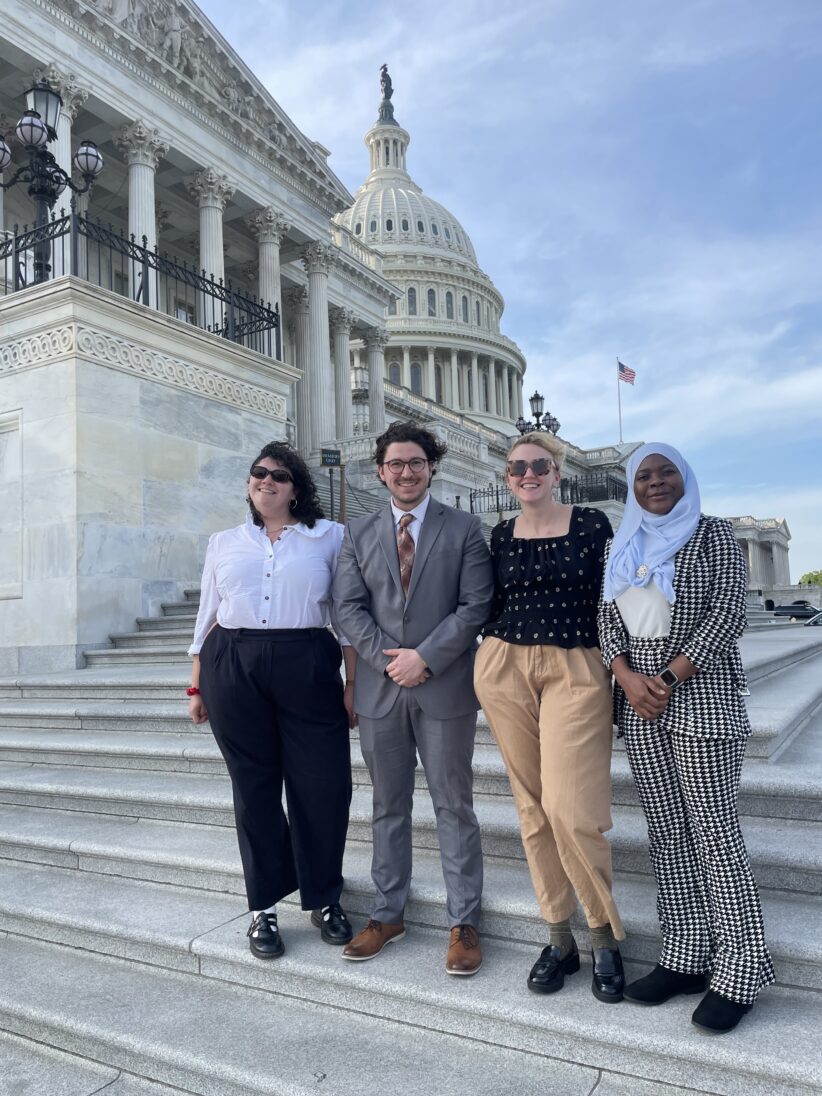
In mid-April, Cornell sponsored three students from Ithaca and one Weill Cornell Medicine for the American Association for the Advancement of Science Catalyzing Advocacy in Science and Engineering (AAAS CASE) workshop. This annual workshop introduces selected STEM and social sciences Ph.D. students with limited knowledge about science policy and advocacy to the federal budget and policymaking process and teaches them ways to use their voice for research.
“At a time when many researchers are facing growing uncertainty around funding, mobility, and research support, I wanted to better understand how scientists can engage more directly with policymakers and advocate for systems that sustain scientific progress and the future scientific workforce,” said Aminat Ibrahim, a doctoral candidate in biomedical engineering.
Participants learned about the different groups involved in the policymaking process and how to target their messaging to specific roles for increased influence. Hunter Gaudio, a doctoral student in biomedical engineering, found this helpful in preparing for the meetings following the workshop.
“The workshop prepared us to frame our message in the context of the federal appropriations process, a member of Congress’s stance and committee assignments, and varying degrees of impact: district, state, and national,” he said. “I believe there has never been a more vital time for scientists to learn how to effectively advocate for the infrastructure that supports responsible research in the public interest.”
In addition to gaining takeaways about how to present the impact of her research to both policymakers and the public, chemistry and chemical biology doctoral candidate Tyler Ball learned about the importance of ongoing advocacy work.
“I am more cognizant of the fact that advocacy takes time and effort: change won’t happen after just one conversation but requires consistent effort,” she said.
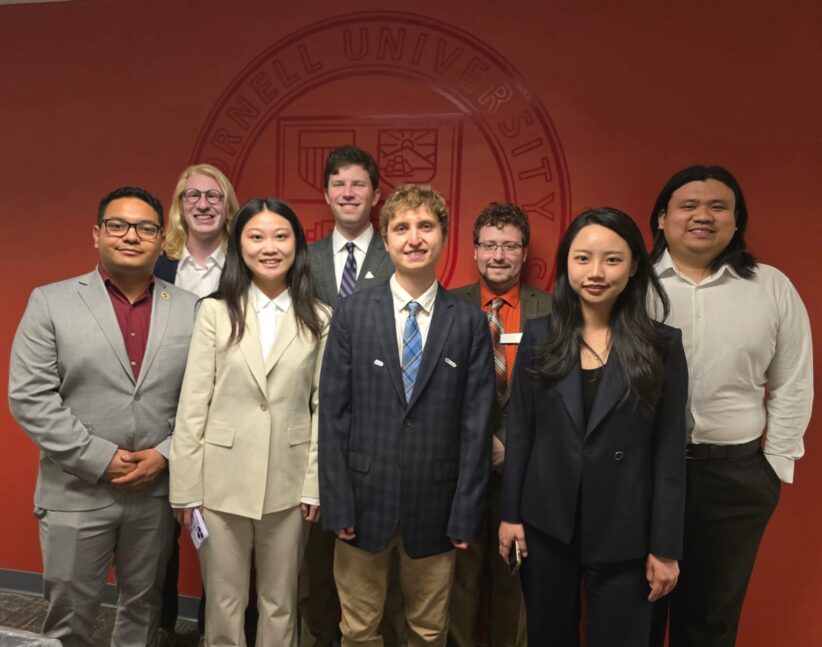
Eight additional doctoral students traveled to D.C. to participate in Advocacy Day, an annual opportunity also coordinated by the Graduate School’s Office of Career and Professional Development. The Cornell Office of Federal Relations organized the meetings for both groups of students to meet with members of Congress, Congressional staff, and current policy fellows to speak about their doctoral work and advocate for research funding.
“I was motivated to learn how to communicate the impact of my work to audiences that might not see its immediate relevance. In the humanities, we’re constantly being asked by people outside our disciplines about the usefulness of what we do, the direct economic impact, what kinds of jobs you can get with a humanities degree,” said Jack Astacio, a doctoral candidate in romance studies. “I wanted to work on my own communication skills to translate the purpose of the work I do, both as a researcher and an instructor, into a language understood by the folks on Capitol Hill.”
Astacio spoke to the importance of sharpening students’ critical thinking and communication skills, and Bingyan Dai, a doctoral candidate in applied economics and management, focused on how her research supports farmers, strengthens business, and contributes to a more resilient and affordable food system. She was able to practice her research communication in meetings with Committee Offices on Energy and Natural Resources and Research and Technology.
“The experience strengthened my commitment to applied economic research and to bridging the gap between academic research and real-world practice through extension and stakeholder engagement,” she said.
In addition to the training Advocacy Day participants received from the Office of Federal Relations, Astacio appreciated that the opportunity also facilitated learning from his peers.
“One of the most enlightening parts of the day was being able to experience how others posed questions or framed their work around political issues that were important to them,” he said. “We were also able to build off each other’s knowledge base to build stronger cases for our interlocutors, prepping each other with knowledge about the different priorities of different members of Congress and further developing each other’s arguments during each meeting.”
The AAAS CASE workshop and Advocacy Days followed a Society for the Humanities trek to D.C. that took place earlier in the spring, during which a few additional doctoral students participated. Careers Beyond Academia in the Graduate School’s Office of Career and Professional Development provided funding support for all three opportunities.