
Grad Tips: Meeting New People
February 23, 2026
By Katya Hrichak
As a graduate student, you have a lot to learn. Scholarship and research aside, there are many facets of the graduate school experience that are important to your success but might not be obvious or easy to figure out. Between achieving a sense of well-being, attending to basic needs, maintaining relationships or caring for others, etc., there’s a lot to keep track of.
The Graduate School is here to help. With the Grad Tips series, we’ll be providing insight into different aspects of the graduate student experience, sharing tips and advice on how to get the most out of your time at Cornell. To vote on the next topic in the series, check for a poll in upcoming issues of the Graduate School newsletter, News and Events.

Photo courtesy of Chris Kitchen
This week’s topic: Meeting new people
Knowing how and where to meet new people as an adult can be challenging, especially for graduate students who have so many demands on time. The good news is that Cornell and Ithaca provide many opportunities for connection.
Having a community is important for anyone, but according to recent research by Associate Dean for Graduate Student Life Janna Lamey, it can be particularly important for graduate students.
“What I found was that if you feel a strong sense of belonging with your peers, you are 2.4 times more likely to intend to continue in your program,” she said. “Why does making friends matter? Two reasons. First, you’re more likely to stay in your program. Second, peer belonging can improve your mental health. In the same study, peer belonging served as a protective factor against depression.”
Making connections can also broaden your perspectives and enrich your graduate school experience in meaningful ways, said Lamey. Beyond simply bringing fun and joy into your daily life, strong relationships can boost your academic confidence, support your mental and emotional well‑being, and help you stay motivated through long, demanding projects.
“I would say peer belonging is essential,” said Lamey. “Isolated research activities that emphasize independent and solitary work, competitive environments, limited communication, overwork, and time scarcity all influence how connected students feel to their peers.”
“Finding a friend group or building connections where you feel safe, supported, and able to be yourself is critical,” said Lamey. “It is something every graduate student should strive for.”
How do I start or where do I begin?
Before you dive into trying to form new connections, it can be helpful to first reflect on what you’re looking for. Are you looking to make friends, build a relationship, find a community, develop a sense of belonging, or something else entirely? Clarifying what you seek can open different pathways to meeting that goal.
Lamey suggests considering the questions of what that goal will do for you and what benefits you hope to gain—understanding yourself is a key first step.
As for how to start, Lamey and Sofia Mattson, a master’s student in design and environmental analysis and wellness fellow at the Big Red Barn, agree that being present and open-minded is essential.
“I think the main ‘how’ was honestly just being open to attending random events, introducing myself to anyone, and learning about other students’ interests in and out of their field of study,” said Mattson, reflecting on how she met new people after starting her program.
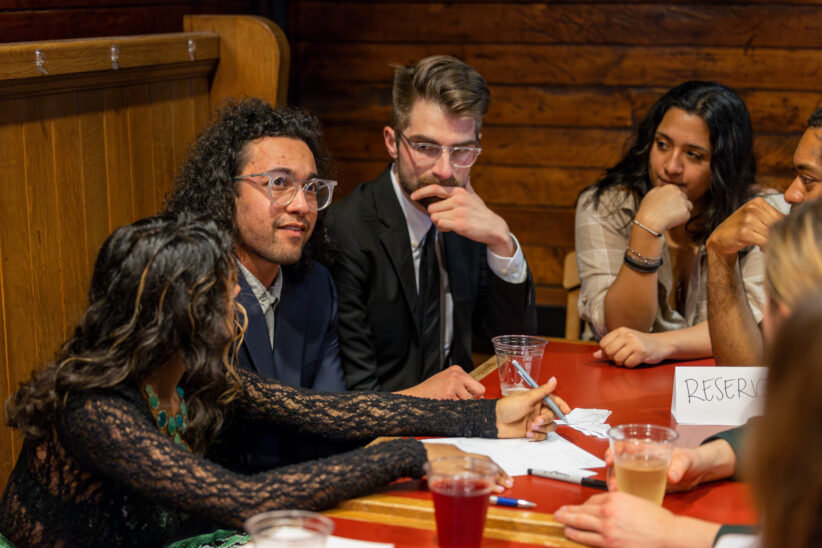
Photo courtesy of Simon Wheeler for Cornell University
What are some more structured ways I can meet people on campus?
Cornell is a large place, which can initially feel intimidating considering how to meet others, but its size also means that opportunities abound.
The Big Red Barn Graduate and Professional Student Center is a great place to meet others. Events at the Barn are open to all graduate and professional students across Cornell’s numerous colleges, schools, fields, and degree programs. Graduate Student Life Advisor Olivia Hopewell points out that most of the events and programming that take place at the Barn are organized by graduate students themselves. “This gives you a built-in opportunity to meet other students who are also looking to make friends,” said Hopewell.
The Barn’s newsletter, which goes out weekly on Friday mornings, contains regular offerings as well as one-off events on different topics. With a range of programming from trivia nights to swing dance to bingo to TGIF, the Barn seeks to provide something for everyone. Following the Barn on Instagram will also help keep you in the loop about upcoming programs.
“I particularly enjoy connecting people who may not expect to cross paths,” said Mattson, who organizes events such as guided nature walks at the Barn. “Collaborating with the other students is such a gift because we are able to create joy, laughter, and connection that strengthen individual and collective purpose.”
The Graduate School’s events calendar is another good resource for finding opportunities. The available filters include one specifically for social and community events, which narrows down the listings to those that specifically help foster connection.
Similarly, Cornell’s events calendar allows filtering by event type, such as meetings, conferences or workshops, networking, exhibitions, etc. Networking events are great spaces for talking to others—that’s the whole point!—and even exhibitions and workshops can provide the opportunity for conversation with other attendees about the given topic.
Another great way to meet others is by engaging in a similar interest. CampusGroups provides information on the hundreds of student groups at Cornell, and it offers filtering specifically for graduate and professional student organizations. The Graduate and Professional Student Assembly is another option for meeting like-minded individuals while participating in university governance.
“Find a club or organization,” said Lamey. “Sharing an experience is key. You don’t have to focus so much on yourself; you’re focusing on the activity you’re doing, and that’s often really helpful.” She added that joining structure groups can also make the process of meeting people feel more natural – you already have a built-in conversation starter and a shared purpose. That shared purpose lowers the pressure, makes interactions feel less forces, and helps connections form more organically. Try different things, said Hopewell, and if you still feel stuck, and are having a hard time with belonging, you can always reach out to her for support and guidance.
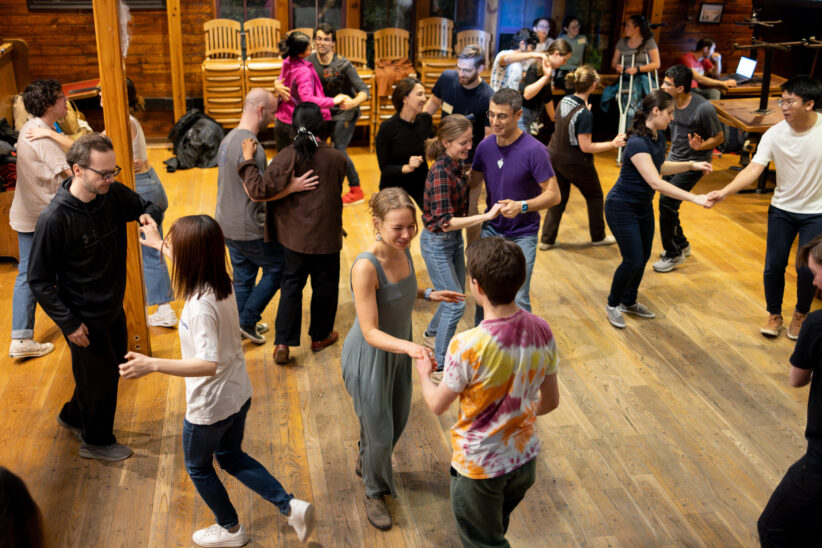
Photo courtesy of Simon Wheeler for Cornell University
Those looking to immerse themselves in activities that may naturally lead to conversation can consider rock climbing at the Lindseth Climbing Center, walking around the Herbert F. Johnson Museum of Art, or returning to the Cornell events calendar for more casual opportunities to connect. The location or event can even provide its own set of conversation openers: For example, asking a fellow climber what they’re working on or how long they’ve been climbing, or perhaps inviting a fellow museum visitor to share their thoughts on a piece or artwork or artist.
For those interested in activities happening outside of clubs and organizations, group fitness classes through Cornell Recreational Services or physical education courses and offerings through Cornell Outdoor Education can provide additional ways to meet others.
What are some ways I can meet people off campus?
Many of the approaches you can use to meet people on campus can be used to meet off campus: Events calendars, external fitness or activity spaces, social groups, etc.
If you’re hoping to engage with others over a shared interest, consider checking out the Downtown Ithaca, Visit Ithaca, or Ithaca.com events calendars. Looking for something more tailored to conversation and connection? Check out Ithaca Social Circle, a group specifically dedicated to fostering connection among those living and working in Ithaca.
Volunteering for one of the many organizations in and around town is another option. Not only will this help you meet new individuals, but it might even lead to finding a broader community and a sense of belonging.
What are some good icebreakers I can use?
Icebreakers are small, low‑pressure conversation starters that help ease the awkwardness of meeting new people and make it easier to form connections. They’re meant to lower the stakes, spark a bit of warmth or humor, and give both people something easy to respond to.
For Mattson, the best way to start a conversation with someone new is showing an interest in their academic focus: “So, why do you really do what you do in school? What is it about your field of study that genuinely gives you that spark?” And, Lamey adds, when in doubt, humor may work in your favor—try, “I promised myself I’d talk to at least one new human today before returning to my computer. Want to be that human?”