
Grad Tips: Writing Spots on Campus
April 13, 2026
By Katya Hrichak
As a graduate student, you have a lot to learn. Scholarship and research aside, there are many facets of the graduate school experience that are important to your success but might not be obvious or easy to figure out. Between achieving a sense of well-being, attending to basic needs, maintaining relationships or caring for others, etc., there’s a lot to keep track of.
The Graduate School is here to help. With the Grad Tips series, we’ll be providing insight into different aspects of the graduate student experience, sharing tips and advice on how to get the most out of your time at Cornell. To vote on the next topic in the series, check for a poll in upcoming issues of the Graduate School newsletter, News and Events.
This week’s topic: Writing spots on campus

Photo by Jason Koski/Cornell University
Being a graduate student involves a lot of writing. Getting into the right mindset for the words to flow can feel like as much of a task as the writing itself, but choosing the right space to write can make a huge difference.
There are many places across Cornell’s campus to put your fingers to the keyboard and get some work done, including the Cornell University Library’s many locations. Alone or in community, in quiet or with background noise, many options are available.
“Whether you’re looking for a silent environment, a community of writers, late-night access, or subject-specific help, campus libraries offer a wide network of resources to make the writing experience more productive and less daunting,” said Leah Dodd, director of Olin and Uris Libraries.
Why should I find a writing spot that’s a good fit for me?
Anyone who has completed a writing assignment has likely struggled at some point or another in the process. Whether it’s focusing, finding the right words, or getting into the right mental state to make progress, this is a common experience among writers.
“A good writing space can make a difference in productivity, motivation, and overall well-being,” said Ye Li, director of the science and agriculture libraries. “Graduate-level writing often requires sustained focus, and having a place that feels comfortable, consistent, and supportive helps reduce stress and maintain momentum.”
Choosing to write in a location separate from your lab, for example, might also help you get into a more focused writing mindset, she added.
How do I find a writing spot that’s a good fit for me?
It’s important to consider your needs, habits, patterns, etc. to help find the right fit. Do you write better in the morning, afternoon, or evening? Do you prefer to be in a familiar, personal space or somewhere you go only for writing? Does background noise help or distract you? Is having people around good for accountability or does that make it more difficult to work?
There are many questions to ask yourself when figuring out how you work best. And, if you’re not sure, the best way to find out is explore your options.
“We encourage graduate students to try out the variety of writing spaces on campus and discover which environments help them focus best,” said Dodd. “Some of you prefer a quiet, dedicated study area, especially those with larger external monitors you can plug into; while others work better with a bit of background activity or in spaces closer to your research community and support network.”
Knowing your personal preferences is the first step to finding a good fit.
How do I find writing spaces on the Ithaca and Cornell Tech campuses?
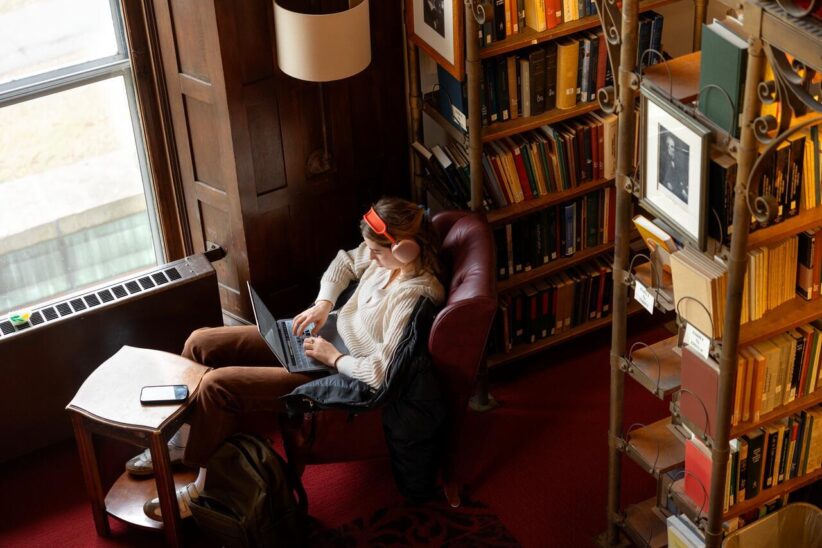
Photo by Jason Koski/Cornell University
The Library’s Find a Space tool is a great way to find just what you’re looking for. The tool allows you to filter by library, reservations, noise levels, features, how you’re planning to work, which spaces you can use (with some options specific to graduate students!), and support spaces.
There are also lots of other good spaces outside of those listed. Take a look around as you go through your day and keep an eye out for any spaces that align with what you’re looking for.
Where are some writing spot recommendations on the Ithaca campus?
- Big Red Barn Graduate and Professional Student Center: Every weekday from 8 to 11 a.m., the Barn hosts Write-ins in the main space, greenhouse, and upstairs. Free coffee is available for writers between 8 and 9 a.m. This is a good environment for students who benefit from being around other writers while working on their own projects.
- Physical Sciences Library: This library offers 24/7 study space, which is beneficial for writers who prefer to work outside of traditional hours or appreciate flexibility in their schedules.
- Mann Library: The third floor hosts the Graduate Study Area and five Graduate Study Rooms, which are exclusively for graduate students and can be reserved for up to eight hours at a time.
- Olin and Uris Libraries: These libraries offer spaces to meet a variety of needs. Dodd and Li recommend asking the staff at the first floor information desktop to help you find space that matches what you’re looking for.
- Olin’s fifth floor offers the Graduate and Faculty Reading Suite or carrels on floors three through seven, which are useful for those seeking quiet work environments.
- Olin room 305, the Peter C. Meinig 1961 Memorial Reading Room, offers adjustable height desks, modern carrels, and natural light.
- For those looking for spaces to share or places to work overnight, group study rooms in Olin and the Fiske or CL3 Rooms in Uris Library might be worth checking out.
- If you like writing with a view, desks are often available in the A.D. White Library, which overlooks Libe Slope.
“Libraries are especially effective as cross-disciplinary boundary spaces. When working in shared academic environments, you often encounter researchers from different fields and librarians who can support your projects,” said Li. “These informal interactions can spark new ideas, mitigate the sense of isolation that sometimes accompanies long writing stretches, and open doors to unexpected collaboration or insights.”
What about writing spots on the Cornell Tech campus?
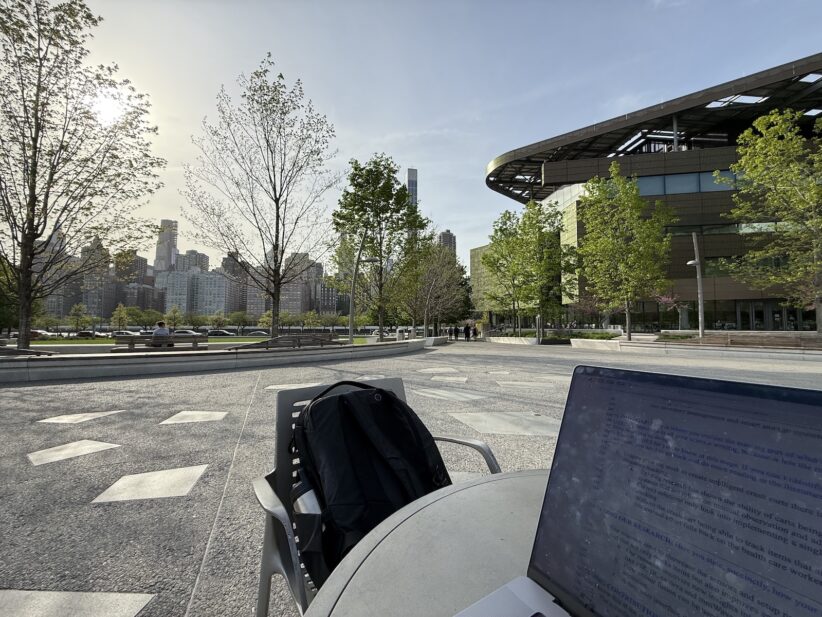
Photo courtesy of Jonathan Segal
The Cornell Tech Student Affairs website lists study spaces available for Tech students on their Printing and Student Spaces on Campus page. Recommendations include the Cornell Tech patio, campus, and hills; Tata 141/151 Huddle Rooms; Cornell Tech Café; Tata Lobby Steps; Tata Master’s Collaboratory and Bloomberg Master’s Studio and Huddles (both for master’s students only); and the Ph.D. Lounge (for Ph.D. students only).
Additionally, the Cornell Tech Library Services page encourages students to check out Weill Cornell Medicine’s Samuel J. Wood Library, which is open to Cornell Tech students during their regular business hours, as well as the New York Public Library.
For Jonathan Segal, a doctoral candidate in information science, the tables between the buildings at Cornell Tech are a go-to.
He says, “The views from Roosevelt Island are amazing!”