
Alum Spotlight: Diana Hernández, Ph.D. ’10
March 9, 2026
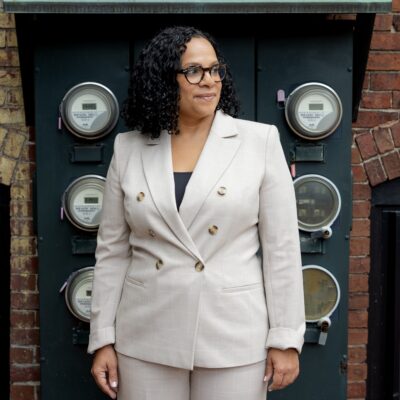
Diana Hernández, Ph.D. ’10, is an alum of the sociology doctoral program. She is now associate professor of sociomedical sciences and founding director of the Energy Equity, Housing, and Health Program at Columbia University’s Mailman School of Public Health and a Climate Justice Fellow at Harvard University’s Radcliffe and Salata Institutes for the 2025-2026 academic year.
Tell us about your current position and what you find rewarding about it.
I am a tenured faculty member in the department of sociomedical sciences at Columbia University’s Mailman School of Public Health and am also the co-director of the Energy Opportunity Lab in the Center on Global Energy Policy in the School of Public and International Affairs. The most rewarding aspect of my current position is the ability to generate innovative research at the intersection of energy equity, housing, and health with a focus on policy and programmatic translation while supporting early career scientists, students, and staff.
How did your Cornell graduate education prepare you to succeed professionally?
My training in sociology (with a concentration in social inequality) and mentorship from faculty in what is now the Brooks School of Public Policy (Prof. Maureen Waller) and the College of Human Ecology (Prof. Gary Evans) prepared me to approach my research through an interdisciplinary and applied lens. This has been helpful in conducting research with the goal of deep understanding that informs evidence-based policy and action.
How do you integrate scholarship with community engagement and policy work?
Growing up in the South Bronx, I was driven to pursue work that meaningfully improves people’s lives. Community engagement remains foundational to my scholarship as communities inspire the questions and approaches while fueling my commitment to the work. I prioritize collaboration with government agencies and other strategic partners to ensure that research is not only rigorous but actionable.
What do you believe is the importance of bringing community engagement, policy work, and scholarship together?
While some academic researchers are committed solely to knowledge production, knowledge for its own sake has never been a satisfying end to me. As a transdisciplinary scholar focused on the social and environmental determinants of health via the lenses of housing and household energy, the things I study affect people’s health and quality of life, and they are also modifiable. Therefore, I have sought to translate evidence into policy and practice to make meaningful change happen. I am especially honored to have seen my work generate tangible impacts in addressing energy insecurity and advancing housing and health equity.
What do you enjoy doing outside of work?
When I left Cornell for a job at Columbia, I dreamed of buying and rehabbing homes in the South Bronx. I have since embarked on three gut renovations and learned so much about project management and social impact real estate. Outside of that, I love to travel and take pride in being a wife and mother.
If you could go back in time to the beginning of your graduate school journey, what advice would you give yourself?
I started my Ph.D. at age 19, so when I look back, I see an eager, courageous, and joyful young lady that struggled, yet grew so much, while in graduate school. If I could have a word with that version of myself, I would say: “Believe in yourself. You are wholly worthy of being at Cornell. You are different and that is a strength. You can, and will, carve out a unique way of doing your work because your vantage point allows you to see the future as full of a wider array of possibilities.”