
Alum Spotlight: Rachit Nigam, Ph.D. ’25
December 8, 2025
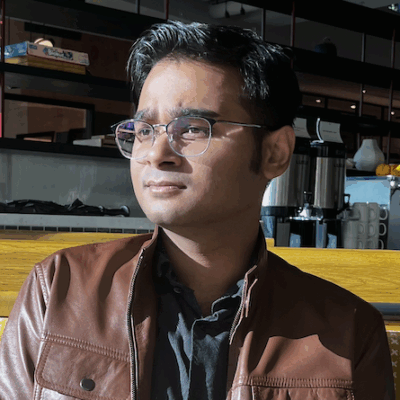
Rachit Nigam, Ph.D. ’25, is an alum of the computer science doctoral program. He is now a visiting scholar at Jane Street, LLC and will be starting as a tenure-track assistant professor at the Massachusetts Institute of Technology (MIT) next January.
Tell us about your current position and what you find rewarding about it.
Both my positions at Jane Street and MIT came from interdisciplinary research I conducted at Cornell combining ideas from programming languages, compilers, and hardware design. My dissertation defined new programming abstractions for building correct and efficient hardware accelerators (specialized circuits which can perform a limited number of computations much more efficiently than a CPU). For Jane Street, this work resonated because they continually build and deploy accelerator systems which need to be really efficient and correct. For MIT, my dissertation work articulated and tackled a key problem in designing hardware systems. My position at Jane Street has been immensely rewarding because I get to work with engineers who can directly benefit from my research work. At MIT, I am excited to mentor the next generation of excellent researchers and tackle challenging problems around accelerator design and use.
How did your Cornell graduate education prepare you to succeed professionally?
My Ph.D. advisor, Prof. Adrian Sampson, the computer science Ph.D. program, and the Computer Systems Lab (CSL) provided support, technical taste, and required pushback needed to make my work intellectually interesting and important. A particularly formative and useful part of my Ph.D. was being able to talk to folks across computer science and electrical engineering who gave multiple perspectives to the problems I worked on.
If you were supported by a fellowship during your graduate studies, how did it help you?
I was supported by a Jane Street Fellowship during one of the years of my Ph.D. The work allowed me to collaborate with researchers at MIT and broaden my work and its impact.
What does it mean to you to have received the SIGPLAN John C. Reynolds Distinguished Dissertation Award and honorable mention for the SIGARCH/TCCA IEEE-CS Outstanding Dissertation Award?
Science is a social process and awards like these happen when senior people in the community come together and recognize work from junior researchers. My dissertation spans two communities, programming languages and computer architecture, and it is a tremendous honor to have my work recognized by both communities. I also think that this creates a tremendous opportunity for collaborating across these communities: By demonstrating that programming languages techniques can solve important problems within the computer architecture community (and vice-versa), I hope to be one of the researchers enabling communication across the two groups.
What was the focus of your dissertation?
My dissertation, titled “Modular Abstractions for Efficient Hardware Design,” focused on the problem of designing new programming abstractions for hardware design. Digital circuits, like the CPUs and GPUs in our computers, are so complicated that they are designed using a whole host of programming tools. Of these, programming languages that describe circuits are the primary way folks design complex circuits. However, unlike software programming languages (like Python or C++), hardware description languages require explicit reasoning about time. This reasoning about time is a key feature of many different ways of doing hardware design but, my research observed, most programming models have no way of explicitly capturing this information in the program. My dissertation explore this thesis, that reasoning about time is key to the design of efficient hardware abstractions, and designed several systems that saw industrial adoption to prove my claims.
What do you enjoy doing outside of work?
I am an avid biker! During my Ph.D., I loved going on bike rides with my graduate school friends and exploring the greater Ithaca region (something I sorely miss after graduating).
If you could go back in time to the beginning of your graduate school journey, what advice would you give yourself?
I have mentioned this before but I firmly believe that science is a social process and it is crucial that we build communities that support, uplift, and recognize important work. I would encourage new graduate students to find or build communities that support them through their time in grad school and beyond!