
Student Spotlight: Elexis Trinity Williams
March 30, 2026
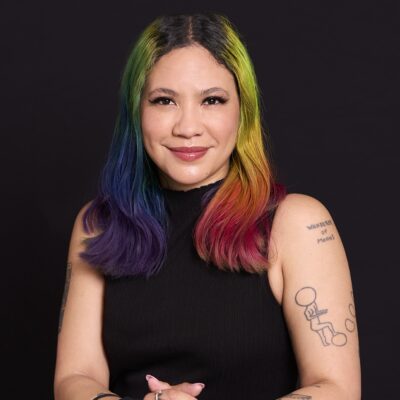
Elexis Trinity Williams is a fifth-year doctoral candidate in science and technology studies from southern California. They earned their A.B. in Africana studies from Brown University and master’s degree in human rights from the University of Minnesota’s Humphrey School of Public Affairs and now studies oceans history with a focus on human-marine entanglements under the guidance of Sara Pritchard at Cornell.
What is your area of research and why is it important?
As an science and technology studies (STS) scholar working in oceans history, I study human-marine entanglements to better understand how encounters with the oceanic have influenced the production of environmental knowledge and ideas about human history and futures. More specifically, my dissertation examines the emergence of scuba and saturation diving among American oceanographers during the middle of the twentieth century, as increasing exposure to embodied experiences underwater changed the way scientists, technologists, and the public understood both oceans and ourselves. I analyze projects like Jacques Cousteau’s aqua lung, the underwater habitat-laboratory systems of the 1960s and 70s, the rise of sanctuary-based science and advocacy, and NASA’s Extreme Environment Mission Operations Program (NEEMO) to understand how the sensorial intimacies of scientific diving shaped ideas about the oceans and the potentialities of the hybrid or enhanced human body, making of an “extreme” or even hostile environment, a “blue home” for humans. Such projects produced fascinating, sometimes contradictory conceptualizations of marine environs and the more-than-human diving body that reworked and complicated narratives about the frontier and the field, drawing in questions of race, gender, indigeneity, and colonial epistemologies.
What are the larger implications of this research?
The ocean is the most significant geographical feature of the planet, and, as is often noted by scientists, environmental advocates, and historians alike, there is still so much we don’t know about it. Even so, it’s been an incredibly evocative symbol and materially significant agent of history that people have engaged with across time, space, and cultures. As the ocean has moved to the center of conversations about environmental crisis, climate resilience, and planetary futures of the Anthropocene (or its many alternatives), it’s been increasingly common to encounter narratives about how the fate of the ocean and the fate of human life – or really, all life – are entwined. My research helps to illuminate how environments, environmental subjects and crises are conceptualized, and the kinds of solutions that become imaginable as a result, emphasizing the ways that sensory or embodied knowledge has influenced orientations to governance, advocacy, and science. In a world where researchers are exploring immersive virtual reality as a tool to develop greater environmental empathy and, they hope, better habits of care for ocean systems; where the Northern Chumash are educating scientists at NOAA about sensory-based knowledge practices for marine biology; and environmental advocates like Sylvia Earle argue that the best way to protect the oceans is to spend time in them, my work historicizes these ways of thinking and engaging with saltwater epistemologies, theories of change – and of course, the oceans themselves. My hope is that it helps contextualize contemporary approaches to environmental resilience and human-ocean relations more broadly.
What does it mean to you to have been selected for a Zhu Family Graduate Fellowship?
This is an honor that accrues not only to me, but also to my family. As a first-generation college graduate, I worked several jobs to put myself through college, so I know intimately how challenging it can be to juggle research and scholarship with outside responsibilities. It’s made me especially grateful to have been selected for the Zhu Family Graduate Fellowship. I have the freedom to immerse myself fully in my dissertation project, knowing that I have the time and resources to do my best work. I pinch myself all the time when I look up from my notes or my writing and realize that I actually get to spend my days doing this research that I care so deeply about in a dedicated and consistent way. I also started graduate school after working for almost a decade, and with a spouse and a young child at home, being able to balance the demands of intensive research with a healthy lifestyle that allows me to be there at night to tuck my kid in for a bedtime story means the world to me.
What will this fellowship allow you to do that you might not have otherwise?
My dissertation project is a bit on the expansive side – it’s both historical and ethnographic, geographically and temporally broad (as is often the case in oceans history) – so it’s been amazing to have the time to really dig in and focus on my research and writing. I’ve been freed up to visit archives when important new sources pop up that can help inform my thinking, to carve out whole days at a time for writing, and participate in workshops and conferences that improve my project incrementally. The Zhu Fellowship has been instrumental in making all of that possible, providing me with the flexibility and support to fully engage the richness of my material and follow my research questions wherever they lead me. I couldn’t be more grateful!
What are your hobbies or interests outside of your research or scholarship?
When I’m not working on my research, I like to visit museums and build Lego castles with my three-year old. She recently started preschool, and I’ve so enjoyed getting to help out in her classroom as a volunteer. I’ll be joining the board of her cooperative school this fall. I also enjoy knitting and making music at home, cooking on the weekends (I love to learn new recipes and techniques!). Reading and writing are obviously a big part of my day-to-day life, but I’ve found it energizing to make time for pleasure reading too. Once a month I participate in a writing group here in town where we’re all gestating different creative projects and we workshop each other’s drafts. It’s a lot of fun!
Why did you choose Cornell to pursue your degree?
I chose Cornell because I wanted to be a part of an intellectual community where I could really thrive and feel at home – the ethos of the school, that dedication to any person, any study, really spoke to me. It was important that I have the flexibility to work across fields and methodologies, because my project was always going to be an interdisciplinary one, and I feel sharpest when I get to think across disciplinary boundaries. I have found that the university makes that easy – even encourages it. There are so many great faculty members, programs, and resources here, so I knew I’d have what I needed to succeed and enjoy the process to boot. I came here to work with my advisor Sara Pritchard, and she’s been a wonderful mentor and committee chair, so that’s been a blessing. I also feel like I’ve lucked out in general, as everyone I’ve had the privilege of working with has been fantastic, intellectually generative, and so helpful. My department is incredibly supportive and collegial, the other grad students are brilliant, and course, Ithaca is gorges. (Forgive the dad jokes – I can’t help myself at this advanced age!) All in all, Cornell STS felt like the best home for the work that I wanted to do and also for me as a person.