
Student Spotlight: Jason Wu
April 30, 2026
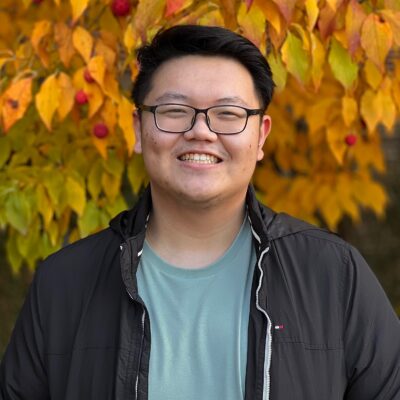
Jason Wu is a doctoral candidate in chemistry and chemical biology from Los Angeles, California. He earned his B.S. in chemistry at UCLA and now studies the development of new organic chemical reactions under the guidance of Tristan H. Lambert at Cornell.
What is your area of research and why is it important?
My research focuses on developing new organic chemical reactions that make it easier to build complex molecules, particularly those used in medicines. Many current methods rely on expensive metals or struggle with certain types of chemical bonds. I design alternative catalytic and nonmetal systems that use more sustainable and accessible components to achieve similar or improved outcomes. By expanding the synthetic toolbox for chemical synthesis, my work helps streamline the discovery and production of pharmaceuticals, avoiding metal contaminants. Ultimately, my research aims to enable scientists to access new types of medicinally relevant molecules that were previously difficult to prepare.
What are the larger implications of this research?
My research addresses a fundamental limitation in how we build molecules, directly impacting the speed, cost, and sustainability of drug discovery and chemical manufacturing. By developing catalytic methods that reduce reliance on scarce or toxic materials, this work enables more efficient and environmentally responsible synthesis. Importantly, it expands access to previously inaccessible chemical space, opening new opportunities for designing medicines with improved efficacy and safety. The ability to more rapidly and sustainably construct complex molecules has far-reaching implications, from accelerating therapeutic development to reducing industrial waste. Ultimately, this research helps redefine how chemistry can meet global challenges in health, sustainability, and technological innovation.
What does it mean to you to be a Bouchet Scholar?
To me, being a Bouchet Scholar represents not only academic excellence, but a commitment to shaping a more inclusive and impactful future in higher education. Throughout graduate school, it has been a central goal of mine to make a meaningful difference in the community around me by fostering environments where individuals feel supported, valued, and a true sense of belonging, even within traditionally competitive academic spaces. I view this recognition as a platform to amplify mentorship, expand access to opportunities, and promote practices that prioritize both excellence and inclusivity. Being a Bouchet Scholar would affirm that my dedication to education, research, and community-building can serve as a pathway toward meaningful and lasting impact in academia.
How do you exemplify the five pillars of the Bouchet Society—character, leadership, advocacy, scholarship, and service?
My scholarship centers on developing innovative catalytic strategies that address longstanding challenges in organic synthesis. As a leader, I started the first graduate research symposium in chemistry at Cornell and contributed to teaching initiatives that strengthen our academic community. I advocate for inclusive education by mentoring students from diverse backgrounds and promoting accessible teaching practices with my involvement as a fellow with the Center for Teaching Innovation. My service includes peer mentoring and outreach via Expanding Your Horizons aimed at supporting student success and expanding science as careers. I emphasize integrity, accountability, and intentional mentorship, working to create environments where individuals feel supported and empowered to succeed.
What are your hobbies or interests outside of your research or scholarship?
Outside of research, I enjoy traveling, exploring different cultures, trying new restaurants/cuisines, and cooking is a passion of mine. I appreciate how food and culture can tell stories and bring people together, and I enjoy recreating and experimenting with dishes inspired by my experiences. These activities allow me to step outside of my usual environment, gain new perspectives, and connect with people from diverse backgrounds. I also value mentoring and outreach, which I see as a natural extension of my interest in connecting with others. Together, these interests broaden my perspective and reinforce the collaborative approach I bring to both my scientific work and academic community.
Why did you choose Cornell to pursue your degree?
I chose Cornell because it offers an environment where rigorous scientific training is paired with a strong culture of collaboration, mentorship, and innovation. The opportunity to work on challenging problems in synthetic organic chemistry within a community that values both fundamental discovery and real-world impact was especially compelling. I was particularly drawn to the ability to develop as both a researcher and educator, with access to strong mentorship and teaching resources that support my long-term goal of becoming a faculty member. Cornell fosters a community where students are encouraged not only to excel scientifically, but also to contribute meaningfully to those around them.