
Student Spotlight: Leonardo Salgado
April 30, 2026
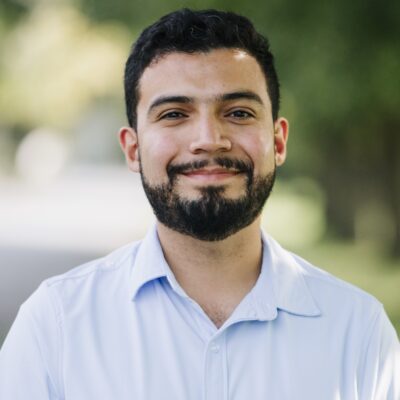
Leonardo Salgado is a doctoral candidate in entomology from Siguatepeque, Comayagua, Honduras. He earned his bachelor’s degree at Universidad Nacional de Agricultura in Honduras and his master’s at Louisiana State University and now studies insect pests in vegetable cropping systems under the guidance of Brian A. Nault at Cornell.
What is your area of research and why is it important?
I am a Ph.D. candidate in entomology at Cornell AgriTech, where I study insect pests in vegetable cropping systems, particularly onion maggot and seedcorn maggot. These insects spend part of their life cycle hidden in the soil, where they can damage crops before growers detect them. My research focuses on understanding their population dynamics and genetics, insecticide resistance, and how management strategies perform under field conditions. This work is especially important as agriculture transitions away from some of the most widely used insecticides, creating a need for effective, reliable alternatives that maintain crop protection while minimizing unintended environmental impacts.
What are the larger implications of this research?
Vegetable growers face increasing challenges from pests, rising input costs, and changes in how insecticides can be used. My research helps improve how pest management decisions are made by identifying strategies that remain effective under these evolving conditions. By evaluating alternative approaches and monitoring resistance, this work supports more sustainable and adaptable production systems. Because these challenges extend beyond New York, the findings can inform pest management in other regions, contributing to long-term food production, environmental stewardship, and grower resilience.
What does it mean to you to be a Bouchet Scholar?
Being a Bouchet Scholar is both an honor and a responsibility. It represents a commitment to excellence in research while also supporting and advocating for others in academia. As an international student, I see this recognition as a reminder of the importance of creating opportunities for those navigating similar paths. It connects me to a community of scholars who value mentorship, service, and inclusion, and it motivates me to continue contributing to an academic environment where diverse perspectives are supported.
How do you exemplify the five pillars of the Bouchet Society—character, leadership, advocacy, scholarship, and service?
My work reflects these pillars across research, leadership, and outreach. My scholarship focuses on applied research that addresses real challenges faced by growers. At Cornell, I have taken on leadership roles in student organizations and departmental committees, contributing to recruitment and student support. I advocate for accessibility in science, particularly through Spanish-language extension and outreach for agricultural communities. Service is central to my work, from mentoring students applying to graduate school to collaborating with growers and extension programs. I approach all of this with a strong sense of responsibility, integrity, and commitment to impact.
What are your hobbies or interests outside of your research or scholarship?
Outside of research, I enjoy walking, playing video games, and watching documentaries, especially historical ones. I find history fascinating because understanding the past helps us make sense of the present and avoid repeating mistakes in the future. I also value spending time with family and friends, staying connected to my community in both Honduras and the United States.
Why did you choose Cornell to pursue your degree?
I chose Cornell because of its strong emphasis on impactful research and its close connection to agricultural communities, which aligns with its land-grant mission. I also value Cornell’s founding principle, “… any person … any study.” The work being done at Cornell AgriTech stood out to me because of its direct engagement with growers and real-world challenges. I was drawn to the opportunity to conduct research that not only advances scientific understanding but also translates into practical recommendations. The collaborative environment has allowed me to work across research and extension, which aligns closely with my long-term goals.