
Student Spotlight: Manoel Pereira Neto
April 30, 2026
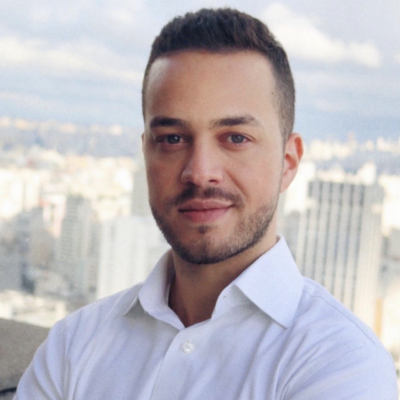
Manoel Pereira Neto is a doctoral student in city and regional planning from São Paulo, Brail. He earned his previous degrees from Harvard University and the London School of Economics and now studies new digital platforms that reshape renting in cities under the guidance of Suzanne Lanyi Charles at Cornell.
What is your area of research and why is it important?
I study new digital platforms that are quietly reshaping the way renting works in cities. I focus on companies that manage access to apartments across multiple buildings, cities, and even countries, offering flexible, mid- to long-term stays that feel more like a service than a traditional lease. Many operate through rent arbitrage, meaning they lease units from property owners and relist them at higher prices. This shift is happening quickly and mostly under the radar, but it is changing what it means to be a tenant and how rental housing should be regulated. At a time when more people rent, understanding these models helps explain who has access to housing and on what terms and with what rights.
What are the larger implications of this research?
My research asks what happens when housing, the place people build their daily lives, shifts from stable tenure regimes and starts to look more like a service you sign up for. Platforms can make renting more flexible, but they can also make it harder for tenants to know what rights they have and what protections apply to them and for governments to keep up. These changes are not felt evenly and often shape access differently across income, race, age, and gender. By comparing how these models operate in different places, I hope to offer insights that help cities respond without losing sight of fairness and access.
What does it mean to you to have been selected as a Mellon/ACLS Dissertation Innovation Fellow?
For me, being selected as a Mellon/ACLS Dissertation Innovation Fellow means being trusted to pursue a project that does not fit neatly within a single field. The fellowship is recognized for supporting work that takes risks and pushes conversations in new directions, so it feels like a strong vote of confidence in the kinds of questions I am asking about housing. It also comes at a moment in the Ph.D. when doubt is part of the process. No matter how supportive your committee is, you eventually start to second guess your ideas and wonder if they really hold together. Knowing that my project was read and selected by scholars across disciplines, beyond my immediate circle, gives me confidence that it does. As important, it provides the financial support to follow those ideas seriously and see where they lead.
What will this fellowship allow you to do that you might not have otherwise?
The fellowship will allow me to conduct immersive fieldwork that would otherwise be difficult to support. A key part of my research involves living in apartments managed by these platform companies in cities like Barcelona and Mexico City to understand how their systems operate in practice. By design, I am choosing to immerse myself in cities with different capacities to regulate platforms and rental housing more broadly to see how these models adapt to distinct institutional contexts and to see how these differences are experienced on the ground. Overall, the fellowship provides me the time and flexibility to focus fully on the dissertation and develop a more ambitious project.
What are your hobbies or interests outside of your research or scholarship?
Even when my “researcher hat” is off, I still find myself exploring cities on foot and paying attention to how neighborhoods change from block to block. I also enjoy traveling, which has pushed me to take up new languages; I am currently on a 130 day streak in Catalan on Duolingo, which is usually what I do on the Route 10 bus to campus. I also enjoy photography, and I keep promising myself I will try one of the many courses offered on campus. Maybe next semester I finally will.
Why did you choose Cornell to pursue your degree?
That’s easy. Cornell was my top choice because of the strength of its city and regional planning department. I had read the work of several faculty members and was drawn to the breadth of their research. My Ph.D. research interests began with rental housing financialization and institutional landlords, and I was especially interested in working with Prof. Suzanne Charles, my committee chair, whose lab examines how global investment in housing affects local neighborhoods and households. Beyond planning, I think Cornell really lives up to its “… any person, … any study” ethos as here I have found support from faculty in government, science and technology studies, media, and business, all of which are important to my project. And last but not least, I was also drawn to Cornell for its centers and institutes that provide funding and spaces to develop ideas. I would especially highlight the Einaudi Center, where I participated in the Dissertation Proposal Development Program last year, which helped me develop key parts of this research and directly supported my ability to secure the Mellon/ACLS fellowship.