
Student Spotlight: Rikki Laser
April 30, 2026
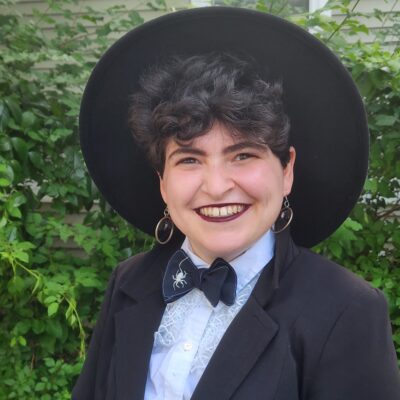
Rikki Laser is a doctoral candidate in psychological sciences and human development from Vernon Hills, Illinois. She earned her B.S. in neuroscience at the University of Iowa and now studies how the interaction of temperature and parental behavior shape development of social behavior and neurobiology under the guidance of Alexander G. Ophir at Cornell.
What is your area of research and why is it important?
I study how temperature and parental behavior interact to shape development of social behavior and neurobiology. My research will allow us to better understand how our physiology, environment, and behavior interact to shape development across the lifespan and beyond. More broadly, my work shows that how we perceive our environment affects our behavior and physiology throughout our lives. Consequently, how we respond to changes in the environment affects health and happiness now and across generations.
What are the larger implications of this research?
My work helps us understand the impact of the early environment on development and behavior and challenges the idea that social behavior is separate from sensation. Further, it has direct implications for models predicting the impact of climate change on animal societies. Importantly, I also hope my research can empower people with differences in sensation and perception and encourage concern for global climate change through community engagement.
What does it mean to you to be a Bouchet Scholar?
To me, becoming a Bouchet Scholar feels both like a recognition and a challenge: a recognition of the excitement and effort I have put into my research, outreach, and community building work at and beyond Cornell; a challenge to continue and expand this work as I continue to develop as a scholar and a person. In meeting this challenge, I feel like I have the support of both the current communities I engage with as well as the new-to-me community of the Bouchet Honor Society.
How do you exemplify the five pillars of the Bouchet Society—character, leadership, advocacy, scholarship, and service?
I embody the five pillars of the Bouchet Society through my commitment to community and access both within and beyond my integrative research. Over my time leading programming in my department, initiatives across the Graduate School, and outreach events across the region, I have sought to provide opportunities for connecting with people and with research to enrich the Cornell community and expand public interest and belonging in science.
What are your hobbies or interests outside of your research or scholarship?
Outside of my research, I really enjoy making art and playing tabletop and video games. Though I enjoy beading, fiction writing, and darning, my particular favorite is crochet for its speed and versatility. I’ve crocheted Pokemon, neurons, and many many rodents into hats, mug cozies, and stuffed animals. In the long marathon of a Ph.D., having a small, quickly completable project can be extra rewarding.
In a different vein, while I find video games (e.g. Pokemon, Slay the Spire, Stardew Valley) and tabletop games (e.g. Daggerheart and Dungeons and Dragons) are fun on their own, I most enjoy them as a medium through which I can stay in touch with old friends and connect with new ones. (Tabletop and video games are also my husband’s favorite hobbies, which is extra fun.)
Why did you choose Cornell to pursue your degree?
I originally chose Cornell because I connected most with the people I met here. In my field, the primary people a student learns from are not only their advisor, but also their research group members and people from the broader scientific field. The graduate students and faculty here were friendly, notably cooperative, and excited about their work; I now count many of them as dear friends who have been integral to my development as a scholar and as a person.