
Comprehending Community-Forest Connections in Colombia
July 31, 2026
In the forests of Colombia, master’s student in natural resources and the environment Elizabeth Gallego is learning how conflict has influenced communities’ relationships with forests.
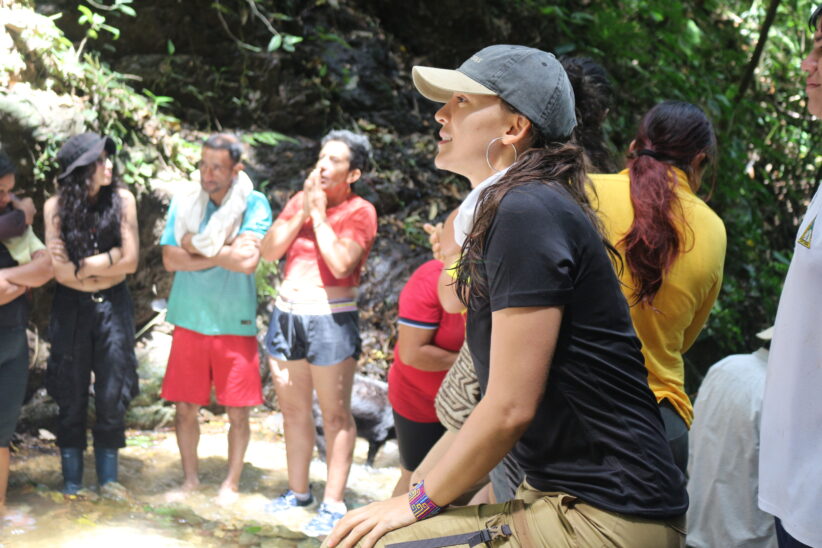
Describe the location of your field research.
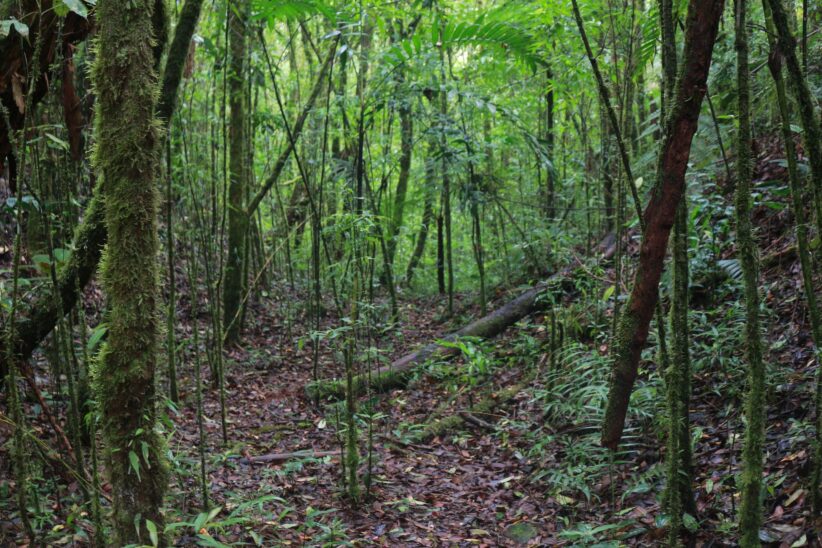
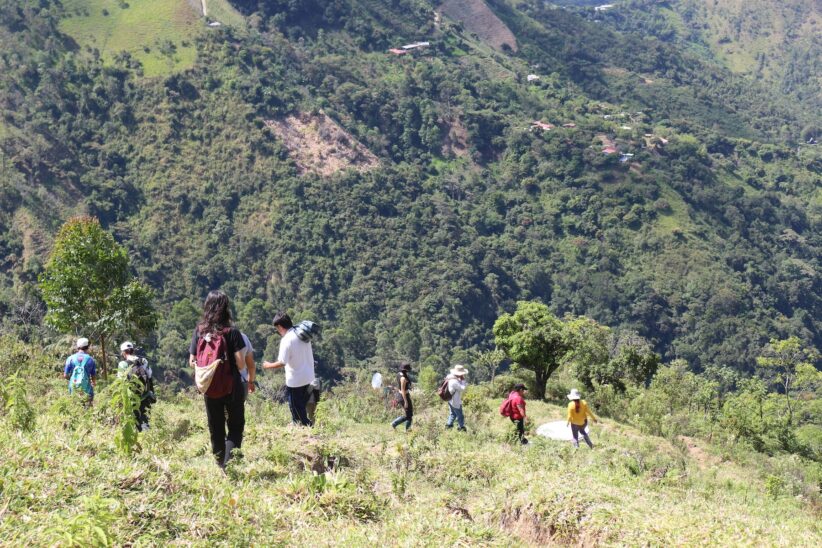
My research location is the southwest region of the Department of Antioquia, Colombia, including municipalities located on the western Andes Mountain range with remnants of the Andean Forest and belonging to the Andean Bear corridor (Támesis, Pueblorrico, Jericó). The research will be carried out with local communities, which include campesino, Indigenous people, and members of social and environmental movements.
What’s the focus of your research?
Using a qualitative, participatory, decolonial, and feminist approach, this research examines how conflict has influenced communities’ relationships with forests over the past three decades and how this determines the future of the forest in this region, one of the most affected by deforestation and violence in Colombia.
What do you hope will be the impact of this work?
This study will contribute to clearer information on forest use in southwest Antioquia, identify how conflict influences the forest-human relationship, and provide information about communities’ vision of the forest. Such locally grounded evidence is essential for designing bottom-up strategies that not only reflect territorial contexts but also strengthen the effectiveness of national efforts to reduce deforestation and achieve conservation and restoration commitments.
How will field research advance your understanding of your research in a way that classes and/or theory do not?
An understanding of the dynamics between rural communities and the forest cannot be gained solely from a classroom; it is necessary to go into the field, understand the contexts in which people live, their realities, and their perspectives, and seek to engage in conversations with people who historically have not been heard and whose experiences are not easily found in a paper or a book. Fieldwork is at the heart of the research process.
What has surprised you about your experience?
I’m from the very place where I’m conducting my fieldwork, and what has surprised me most is how eager people are to be part of the research process. I’m also grateful for the opportunity to receive funding from Cornell to carry out this fieldwork and to be able to contribute in some small way to the transformation of my country.
How did Cornell programs and/or faculty mentors help connect you with the opportunity to carry out this research?
The Cornell faculty and my mentors helped me shape my research proposal, guided me, and provided me with the tools I needed to conduct my fieldwork.
What would you say to students considering applying to Cornell for grad school?
Applying to Cornell gives you access to a wide range of resources and opportunities that can help you make an impact in your community, city, or country. It’s definitely worth applying and pursuing a graduate program at Cornell.
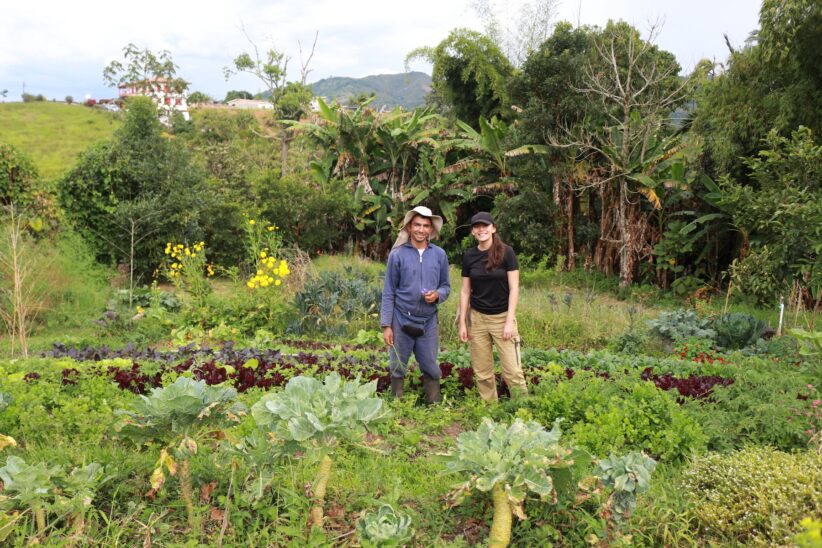
Gallego stands with a campesino on his agroecological farm. Through his project, this campesino has chosen to remain in his territory, resisting extractivism by producing food agroecologically and helping conserve the municipality’s agrobiodiversity.
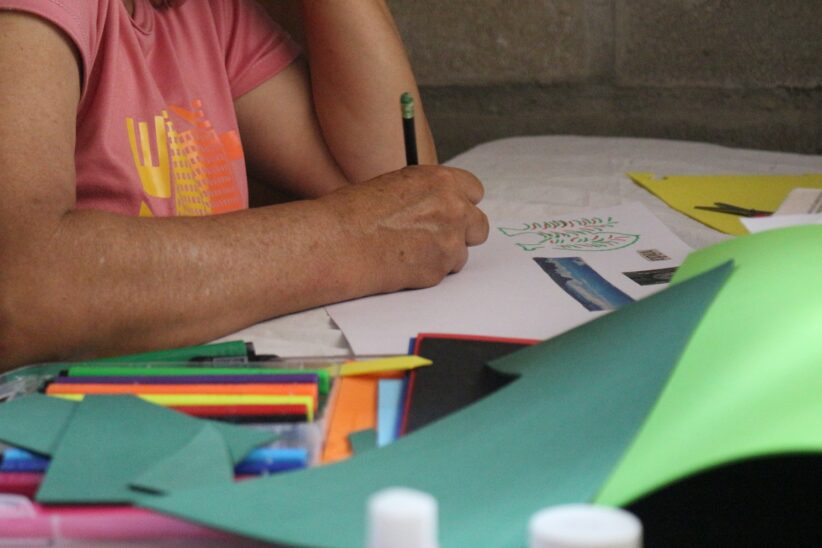
A campesina creates a collage that reflect her experiences, memories, and aspirations for the Andean Forest.
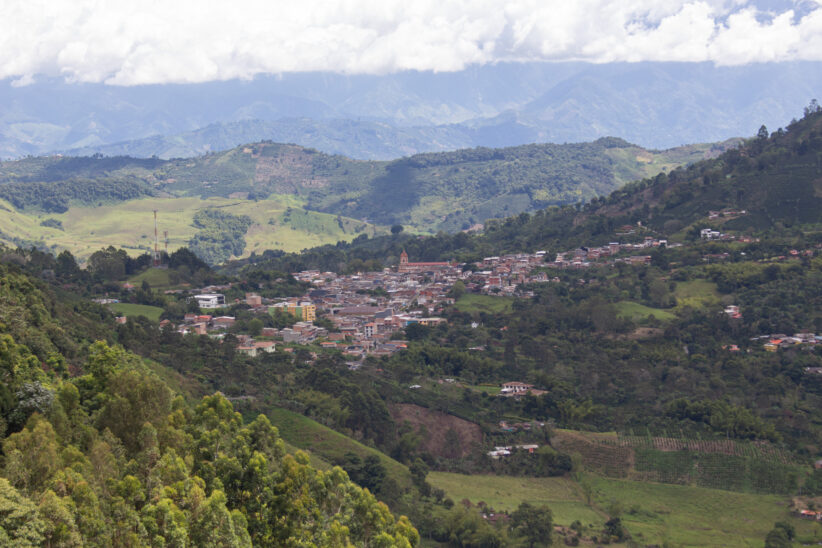
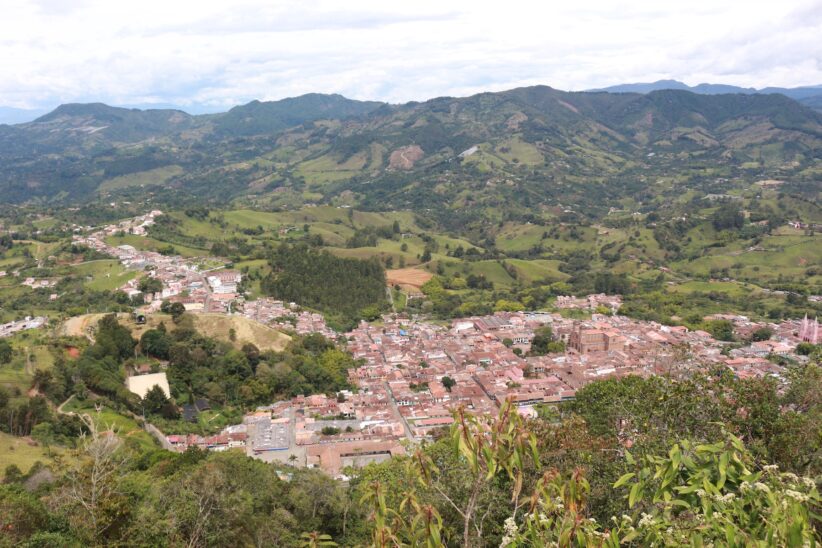
Jericó, a neighboring municipality where much of the native forest has been transformed by agro-industrial expansion. The municipality is also the site of an ongoing socioecological conflict surrounding a proposed large scale mining project, which threatens important remnants of Andean and tropical dry forest.
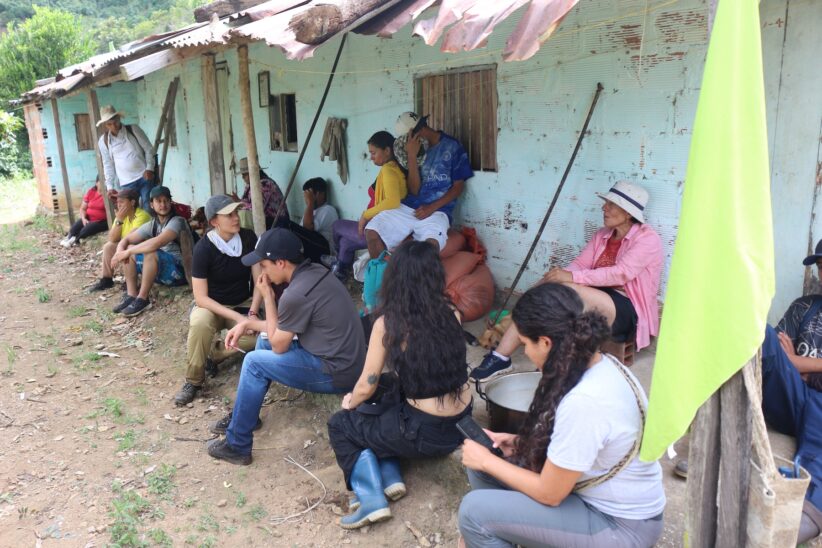
Participants share reflections after the paseo de olla about how they envision living in their territory and the future of the forest and its freshwater sources.
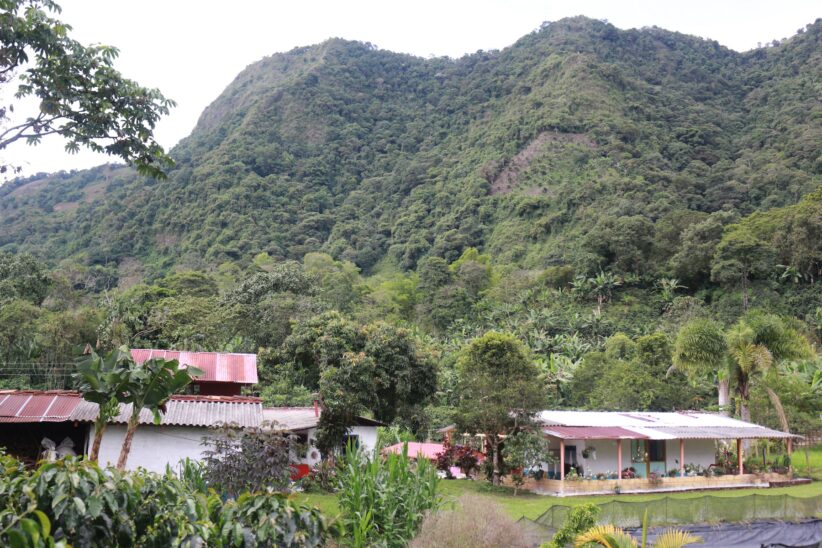
Campesino homes in Pueblorrico, where families cultivate coffee and plantain near a protected area
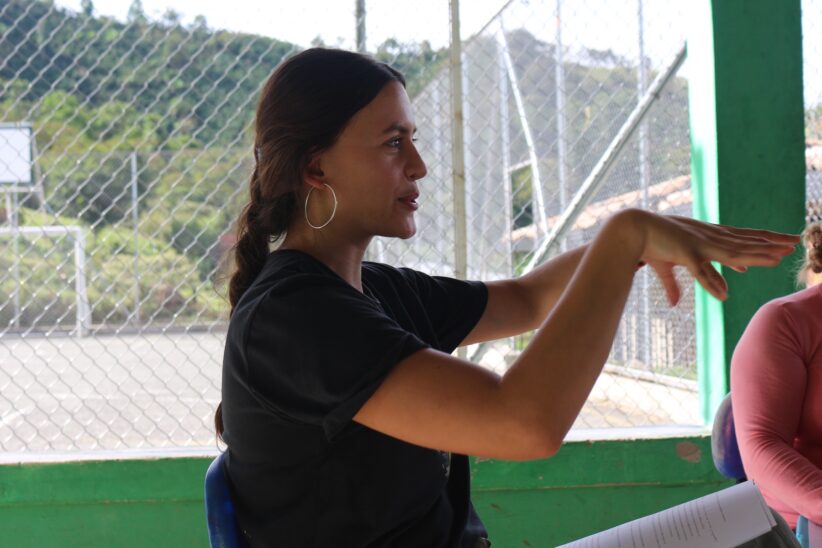
Gallego leads a story circle with campesinas, exploring their perceptions and uses of the forest in the context of ongoing socioecological conflicts.