
Public Policies, Housing, and Consumer Well-being
October 26, 2026
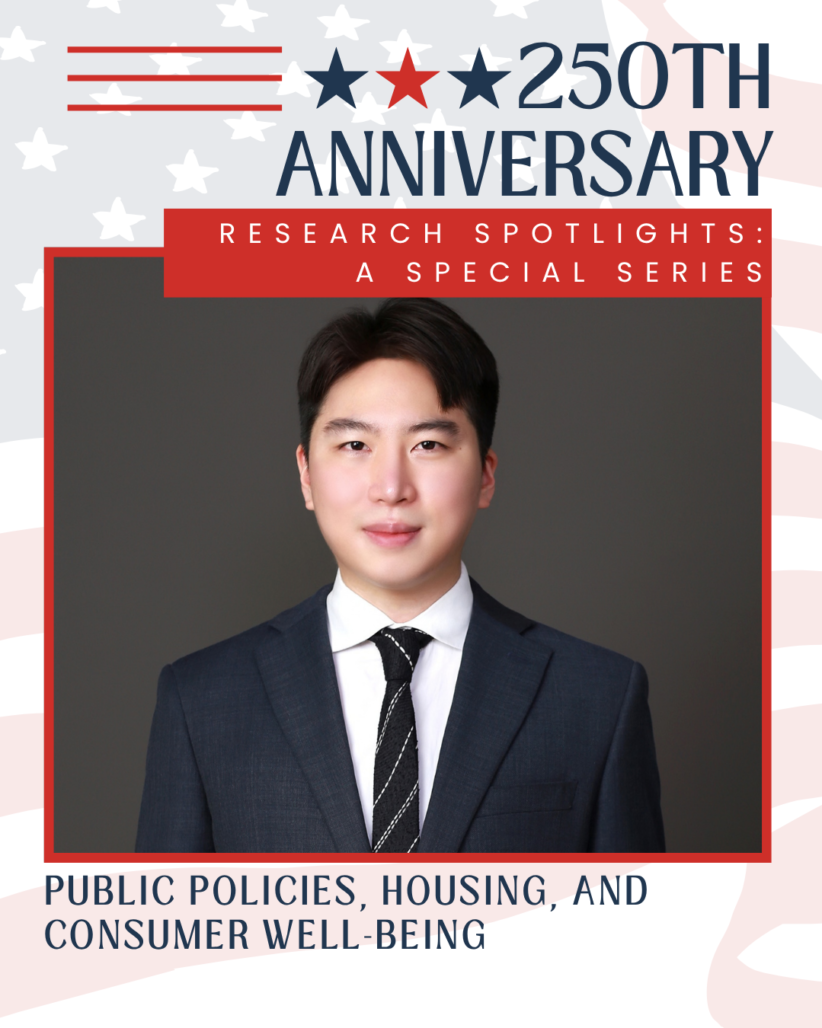
Jongho Kim, a doctoral candidate in management, shares his research as part of a special spotlight series celebrating the United States’ 250th anniversary. In this series, we’re inviting current graduate students and alumni to share how their research explores the past, interrogates the present, and helps us imagine the next 250 years of life in America to engage with this important milestone.
In a couple of sentences, what is the focus of your research?
My research studies how public policies affect consumer well-being, with much of my current work focused on housing. I study questions such as how rent control and restrictions on algorithmic rent pricing affect renters’ satisfaction and spending, while developing new statistical methods to estimate causal effects on outcomes that are often difficult to measure directly.
What inspired you to pursue this area of research, and why does it matter today?
I was drawn to housing because it is such an important part of everyday life and the largest monthly expense for many renters. More than a third of U.S. households rent, and rent burdens are at a record high, with about half of renters cost-burdened, spending more than 30 percent of their income on housing. With policymakers looking for ways to address these pressures, I want to understand what housing policies actually do for renters and the communities where they live.
What is one common assumption about your topic that your research challenges or complicates?
A common assumption is that housing policies can be evaluated mainly by whether they achieve their intended effects. My research shows that unintended effects can be just as important. In St. Paul, rent control improved renter satisfaction, especially among lower-income renters, but it also changed residential mobility and affected local businesses. In San Diego, restricting the use of competitors’ private data was intended to reduce coordination among landlords, but it may also have reduced pricing efficiency and lowered renters’ satisfaction with rent prices.
What does your research reveal about change over time in the United States, whether social, cultural, political, environmental, or technological?
Housing affordability is a longstanding problem, but both housing markets and the tools used to study them are changing. New technologies such as algorithmic rent pricing have created new policy questions about how pricing tools and the data they use should be regulated. At the same time, new sources of data allow researchers to study parts of the renter experience that were previously difficult to observe. My research uses these developments to ask new questions about an important problem.
What is the most surprising discovery or insight you have encountered through your research?
One thing that surprised me in the St. Paul rent control project was that grocery spending at local stores went down after the policy. We had expected the opposite, since lower housing costs should leave renters with more money to spend. But when we looked at who was moving in and out of the area, we found that higher-income renters were more likely to leave. That change in the mix of residents was large enough to push local grocery spending down.
If you could share one takeaway from your research with the American public, what would it be and why?
I would emphasize that we need to look beyond rent when evaluating housing policy. Housing is a multi-attribute service, so renters care about things like maintenance, safety, and communication as well as price. Administrative data can show changes in rent or turnover, but they do not always tell us whether renters are better off overall. For example, lower rents may come with worse service. Review text helps us see these other parts of the housing experience and understand the effects of a policy more fully.