
Student Spotlight: Preetaman Bajwa
October 12, 2026
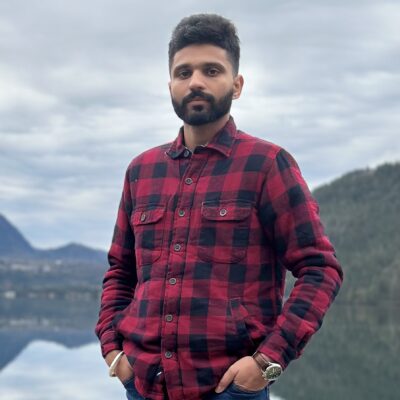
Preetaman Bajwa is a doctoral student in soil and crop science with a focus on weed science from Punjab, India. He earned his B.S. from Punjab Agricultural University and his M.S. from Texas Tech University and now studies integrated weed management under the guidance of Vipan Kumar at Cornell.
What is your area of research and why is it important?
My research focuses on integrated weed management, particularly managing herbicide-resistant weeds by combining chemical and nonchemical approaches. I work with problematic weeds such as waterhemp and horseweed in corn and soybean systems. My research evaluates tools such as cover crops, inter-row mowing, weed electrocution, harvest weed seed control, and herbicides and studies how they can work together. Herbicide resistance is a major challenge for growers, and relying on herbicides alone is becoming less effective. My research aims to understand how these tools can provide effective weed control while reducing the number of weed seeds returning to the soil and causing future problems.
What are the larger implications of this research?
Weeds are one of the major challenges to crop production and can substantially reduce yield and profitability if they are not effectively managed. At the same time, the continued evolution of herbicide resistance is reducing the number of effective options available to farmers. My research aims to help develop more diversified weed management programs that can maintain crop productivity while reducing overreliance on herbicides. In the long term, integrating different management approaches can help slow the evolution of herbicide resistance, reduce weed seedbanks, and give growers more options for managing difficult weeds.
What does it mean to you to have received First Place Overall Individual – Graduate Student in the 2026 Northeastern Weed Science Society’s Collegiate Weed Science Contest?
This achievement means a lot to me. Other students participated as part of their university teams, but I represented Cornell individually in the graduate division. I completed all parts of the competition on my own, including activities such as sprayer calibration, that other universities completed as a team. This made winning first place overall especially meaningful to me and gave me confidence. I was also happy to receive the highest score in farmer problems, where we evaluated real field situations, identified potential problems, and provided practical management recommendations to the growers.
How did participation in this contest draw upon your research and experiences at Cornell thus far?
A lot of what I have learned at Cornell came together during this contest. Through my research, I spend a lot of time in the field identifying weeds, evaluating herbicide performance and crop injury, and trying to understand why a particular management practice worked or failed. I have learned a lot from working with Cornell weed scientists, growers, and fellow students. These experiences helped me throughout the different parts of the contest, including weed and herbicide identification, calibration calculations, sprayer calibration, and the farmer problems section, where I had to use both my scientific knowledge and field experience to solve practical problems.
You also received the 2026 Gerald O. Mott Award from the Crop Science Society of America. What does receiving this award mean to you?
Receiving the Gerald O. Mott Award is very meaningful to me because it recognizes different parts of my graduate journey, including research, academics, leadership, and service. During my time at Cornell, I have tried to be involved beyond my own research through teaching, outreach, mentoring students, and serving in leadership roles within Cornell and professional societies. It is very rewarding to have those efforts recognized by the Crop Science Society of America. This award also motivates me to continue improving as a researcher and stay involved in teaching, leadership, and service as I work toward a career in academia.
You also received the 2025 Travel Enrichment Experience Award from the Weed Science Society of America. What does receiving this award mean to you?
Receiving the Travel Enrichment Experience Award was a great opportunity for me, especially because only one graduate student is selected from the Northeastern region each year. Through this award, I visited Corteva Agriscience in Indianapolis and had the chance to interact with industry weed scientists and learn about herbicide research, product development, and career opportunities in industry. It gave me a better understanding of how research moves from early development to practical solutions for growers. The experience also helped me build connections with weed scientists outside academia and broadened my perspective on different career paths within weed science.
What are your hobbies or interests outside of your research or scholarship?
Outside of research, I enjoy traveling and exploring new places whenever I get the opportunity. I also like playing badminton and spending time with friends. Another thing I really enjoy is being involved in student organizations and professional societies. I helped start the Cornell Weed Science Club, where I enjoy organizing hands-on activities for students to learn more about weed science. I also serve on the American Society of Agronomy Board of Directors as the graduate student representative. This has given me opportunities to meet students and professionals from across the country and become involved in leadership and outreach activities.
Why did you choose Cornell to pursue your degree?
Cornell has a strong weed science program, and I was especially interested in the opportunity to work on both chemical and nonchemical approaches to weed management. Cornell was one of the universities I always looked up to because of its reputation in agricultural sciences. I also liked that the research here has a strong connection with extension and agriculture across New York. During my Ph.D., I have been able to do field research, interact with growers, teach students, participate in outreach, and take on leadership roles. These experiences fit very well with my goal of pursuing a career in academia.