
Student Spotlight: Sadie Azad
November 10, 2026
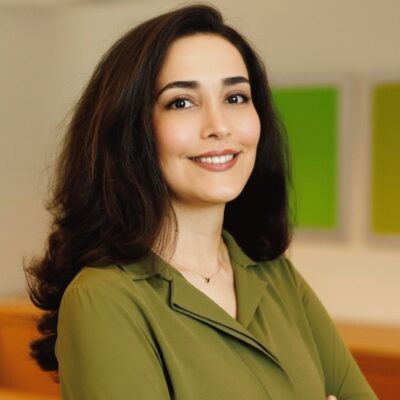
Sadie Azad is a doctoral student in nutrition with a focus on nutrition for metabolic health from Isfahan, Iran. She earned her A.S. in biology from Tompkins Cortland Community College and B.S. in biological sciences from Cornell University and now studies nutritional influence on formaldehyde defenses under the guidance of Meng Wang at Cornell.
What is your area of research and why is it important?
Formaldehyde is best known as a toxic chemical in smoke and some building materials, but our own cells also produce it every day as a byproduct of normal metabolism, including the breakdown of nutrients. Formaldehyde can damage DNA, and if that damage is not repaired, it can lead to mutations and cancer. My research asks how the nutrients we eat influence how much formaldehyde our bodies make, and how cells protect themselves from it. I study cells and mice that lack key formaldehyde defenses to understand when this natural chemical becomes harmful.
What are the larger implications of this research?
Everyone is exposed to formaldehyde, both from the environment and from inside our own bodies, so understanding how we handle it matters for public health. Some people carry genetic differences that weaken their defenses against formaldehyde, which can raise their risk of bone marrow failure and blood cancers. If we learn how diet affects formaldehyde levels, we could one day give evidence-based nutrition advice that lowers cancer risk, especially for these vulnerable groups.
What does it mean to you to be a Dean’s Scholar?
Being a Dean’s Scholar means a great deal to me because my path to a Ph.D. has not been linear. I moved to the United States from Iran and studied at Houston Community College and Tompkins Cortland Community College before transferring to Cornell. This recognition shows me that an unconventional path can still lead to a career in science. It also reminds me how much it matters when institutions invest in students from many different backgrounds.
What are you most looking forward to in regards to being a Dean’s Scholar?
I’m most looking forward to joining a community of Dean’s Scholars from across many fields. I’m excited to attend events, meet students whose research is very different from mine, and build connections that could become lasting friendships and collaborations. I also hope to find mentors outside my own lab who can offer new perspectives on graduate school and career paths. Finally, I want to grow as a communicator. Explaining my research to people outside nutrition and cancer biology is a skill I want to build, and these conversations will be a great place to practice.
What are your hobbies or interests outside of your research or scholarship?
Outside of work, I enjoy cooking, taking care of my many plants, embroidering, and walking the beautiful trails of Ithaca. These hobbies help me slow down and recharge, and they give me a chance to create something with my hands.
Why did you choose Cornell to pursue your degree?
I first came to Cornell as a transfer student, drawn by its founding vision of “any person, … any study,” which felt true to my own path. As an undergraduate, I joined Dr. Meng Wang’s lab, where I learned how metabolism shapes genome stability and cancer risk. That experience made me want to continue this research at a deeper level. Cornell’s nutrition program is among the strongest in the world and brings together molecular biology, metabolism, and human health in a way few programs do. Staying here also means continuing to grow within a community that already feels like home.