
Summer Success Symposium
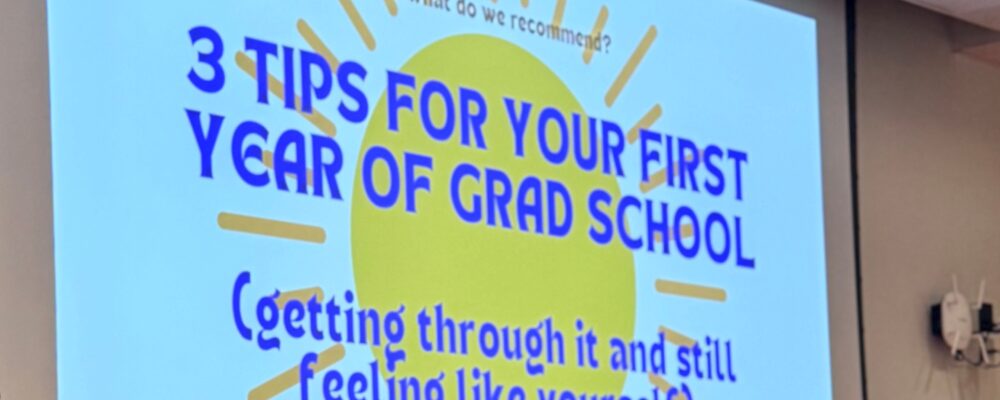
The Summer Success Symposium is a professional and community development event for new and continuing research students from across all graduate fields. Open to all research degree students, this symposium has a particular focus on bringing together Graduate School Dean’s Scholars and other students with an interest in contributing to Cornell’s core value to provide a Community of Belonging where scholars representing different backgrounds, perspectives, abilities, and experiences can learn, innovate, and work in an environment of respect.
Through this symposium, participants have the opportunity to form connections and establish community. This symposium also provides participants with the opportunity to engage with successful alumni, faculty, and professionals. Summer Success Symposium keynote and workshop content focused on providing participants with access to knowledge and insights that will help them navigate their successful transition into and progression through their graduate studies.
2026 Summer Success Symposium
August 18, 2026 | 10 a.m. – 3:30 p.m. ET | G10 Biotechnology Building
Agenda
10-10:15 a.m. ET
Check-In
Welcoming Remarks
10:15 – 10:30 a.m. ET
Speaker: Sara Xayarath Hernández, Associate Dean for Inclusion and Student & Faculty Engagement, Graduate School
Opening Plenary Session—Navigating Mentoring Relationships: Challenges, Opportunities, & Considerations
10:30 – 11:30 a.m. ET
Session summary: student-faculty mentoring relationships can play a pivotal role in shaping the academic and career trajectories of graduate students. Strong mentoring relationships are dynamic, collaborative, student-centered, and developmental, and they require ongoing dialogue between students and their faculty mentors about what works and is not working in the mentoring relationship. In this keynote, through dialogue, vignettes, and activities, we will engage in self-reflection and develop tools and strategies for navigating the student-faculty mentoring relationship.
About our Speaker
 Steve Desir, EdD is an Assistant Research Professor in the Pullias Center for Higher Education and currently serves as the Director of Professional Development and Organizational Learning for the Equity in Graduate Education Resource Center at USC. Desir’s research examines racial equity issues in higher education student recruitment, selection, and student success initiatives. He serves as the Director of Professional Development and Organizational Learning for the Equity in Graduate Education Resource Center which promotes equity in graduate education through research on holistic graduate admissions practices and professional development opportunities that provide faculty and administrators with the tools and resources to create institutional change.
Flash Talk & Engagement Session: Caring for Your Health & Well-Being
11:40 a.m. – 12:40 p.m. ET
Session Summary: This session will include a series of flash talks highlighting the importance of taking a proactive approach to managing your overall health and well-being, opportunities on campus in the greater Ithaca community to engage in fitness and recreational activities, and counseling resources accessible through Cornell Health.
About our Speakers
 Janna Shine, Ed.D., is the Associate Dean for Graduate Student Life in the Cornell Graduate School. In her role, Janna focuses on being available to graduate students who may want to chat about almost anything. Specifically, Janna takes a student-centered approach to support the unique needs of each graduate student while understanding that a holistic approach is essential. In addition to meeting with individual students, Janna continuously seeks out partnerships across campus to identify strategies to more significantly impact the graduate student experience. The goal is always how we can improve the student experience through an upstream approach – what structures, systems, and programs are needed for our students to thrive. Janna has been in graduate education for over 20 years and recently earned her doctorate in Educational Leadership and Change. Janna continues to be in awe of our graduate students and feels privileged to be a small part of their journey as they prepare to be leaders in their field of study.
 Olivia Hopewell, Ph.D., is the Graduate Student Life Advisor in the Graduate School at Cornell. She brings a wealth of unique qualifications and experiences to the Graduate School. With a PhD in Greek, Latin, and Classical Studies from Bryn Mawr College, she has taught as an adjunct professor at BMC, SUNY Cortland, and Cornell through the Prison Education Program. Her role as a College Campus Violence Prevention Educator in Tompkins County has honed her skills in managing sensitivities in challenging conversations. Olivia’s experiences have required excellent interpersonal skills, solid problem-solving, and dynamic student advising. She is a systems thinker who uses a student-development approach to working with graduate students. Her goal is to serve graduate students holistically and support the unique needs of the graduate school community.
 Wahieñhawi “Hawi” Hall, LCSW (she/hers) (Mohawk/Cherokee), is the Assistant Director of Embedded Therapy within Counseling and Psychological Services (Cornell Health). Hawi also has served as the Indigenous Student Community Liaison, working to provide specialized support, equitable access to services, and community outreaches to the population. In her roles, Hawi has been instrumental in the expansion of community-based services and supporting Cornell’s implementation of the Okanagan Charter (Health Promoting Campus Initiative) Call to Action of embedding health into all aspects of campus culture. She is committed to promoting decolonization in systems, equity, and inclusion for historically marginalized groups, while supporting increased access to mental health consultation for faculty and staff. Hawi is a graduate of the MSW program at Syracuse University, and is currently beginning her Doctorate of Social Work program at SUNY Buffalo.
Networking Lunch
12:40 – 1:15 p.m. ET
Alumni Keynote Session—Finding Your Way: A Scientist’s Serendipitous Career Path from Academia to Science Advocacy
1:15 – 2:30 p.m. ET
Session summary: In this talk, Dr. Jason Marvin will discuss his professional trajectory and how one’s career rarely unfolds exactly as planned. He will also share how to position yourself to recognize and embrace unexpected opportunities as a strength rather than a setback. Dr. Marvin will reflect on formative experiences from his time as a graduate student and postdoctoral researcher, with an emphasis on how intentional skill-building, meaningful mentorship, and authentic relationships enabled him to transition from the path to the professoriate to a role in science advocacy and policy. Whether you aspire to academia or are still forging your own path, Dr. Marvin will offer practical advice on how to align your purpose with your goals while building community and finding fulfillment during your time at Cornell.
About our Speaker
Jason Marvin, Ph.D. ’22, is the Director of Partnerships and External Relations at the American Institute for Medical and Biological Engineering (AIMBE). He received his B.S. and Ph.D. in biomedical engineering from The University of Texas at Dallas and Cornell University, respectively. As an NSF Graduate Research Fellow, his work under Dr. Nelly Andarawis-Puri developed a recombinant protein therapeutic for adult tendon regeneration. He completed postdoctoral training in genetics and regenerative biology with Dr. Jenna Galloway at Harvard Medical School (HMS), where his work supported by an HMS Dean’s Postdoctoral Fellowship, the Orthoregeneration Network (ON) Foundation, and the National Basketball Association (NBA) identified key immune regulators of enthesis regeneration. At AIMBE, Jason leads multi-scale advocacy initiatives that mobilize biomedical researchers across academia, industry, and government on a global scale. He directs broader coalition efforts, including AIMBE’s Council of Societies and the Friends of NIBIB (FoNIBIB). They organize congressional activities, including Capitol Hill Days, educational briefings, and medical technology showcases for biomedical researchers to advocate for biomedical research. He also develops policy updates and educational programs to empower scientists of all career stages to engage meaningfully with non-scientific audiences. Prior to AIMBE, Jason worked as a science policy analyst in the Texas House of Representatives. During his graduate studies at Cornell University, he served as a Graduate Resident Fellow (GRF) in William Keeton House and as a Center for Teaching Innovation (CTI) Graduate Teaching Fellow. He was also actively involved in K-12 STEM education and outreach as a GRASSHOPR Fellow and facilitator for Cornell’s Diversity Programs in Engineering. In recognition of his scholarship, leadership, and service, he was named a Dean’s Scholar and received the Provost Diversity Fellowship, Ephrahim Garcia Graduate Excellence in Mentoring Award, Zellman Warhaft Graduate Student Commitment to Diversity Award, and Exemplary Service Award – Advanced Career Student.
Closing Plenary Workshop: The Why Behind the Work
2:30 – 3:30 p.m. ET
Session Summary: During this interactive session, participants will reflect on their personal motivations and how they connect to their larger goals. Through collaborative discussions and hands-on activities, they will gain insight on how to stay motivated, navigate challenges with intention, and find meaning throughout their graduate experience.
About our Workshop Creators & Facilitators
 Helen Stec is a 5th year Ph.D. Candidate in the field of Neurobiology and Behavior and received their BS in Neuroscience from Ohio University. Their research explores how internal physiological states shape behavioral decisions. Using an interdisciplinary approach in livebearing fish, Helen investigates how chromatin structure and gene expression in the brain correlate with female receptivity across the female reproductive cycle. Helen currently serves as the OISE Graduate Coordinator for Academic Success & Belonging with the Dean’s Scholars Program, where they support the academic and professional development of graduate students. Previously, they led the MAC Peer Mentoring Program, aiding first-year graduate students in identifying and forming community at Cornell. In their free time, Helen enjoys playing roller derby and cooking.
 Alexis Smrekar is a rising 3rd year PhD student in the field of pregnancy immunology at the Baker Institute for Animal Health. Her research aims to understand the conserved (and unique) roles of natural killer cells in placental mammals by studying maternal-fetal tolerance in the horse. Alexis is a Graduate School Dean’s Scholar and serves as the OISE Graduate Coordinator for Academic Success & Belonging, supporting the program from within. She grew up in Tampa, Florida and received her dual-degree BSc in Biology and Environmental Science from the University of Florida, where she first developed an interest in the nexus between reproductive and environmental health.
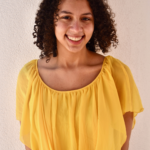 Claudia Chambliss is a 5th year Ph.D. Candidate in the field of Biophysics in the Department of Molecular Biology and Genetics and received her BA in Physics and Biochemistry from the University of Mississippi. Her research explores how Golgi resident proteins facilitate trafficking events through and from the Golgi Complex through the lens of structural biology. Claudia currently serves as the OISE Graduate Coordinator for Community Engagement, where she generates fun social events for the graduate community and staff. Currently, she serves as an officer for the Biophysics GSA and in her free time, Claudia enjoys baking, karaoke, and reading.
Event Sponsors
Graduate School Office of Inclusion & Student Engagement, the Cornell Duffield College of Engineering Office of Inclusive Excellence, and the Cornell Chapter of the Bouchet Graduate Honor Society
Attribution Statement
This program was modeled in part after PROMISE: Maryland’s NSF AGEP Summer Success Institute.
The launch and institutionalization of the Summer Success Symposium benefited from support from the 2016 ETS/CGS Award for Innovation in Promoting Success in Graduate Education and National Science Foundation under Award No. 1647094, CIRTL AGEP Transformation Alliance from 2016-2022. Any opinions, findings and conclusions or recommendations expressed in this material are those of the Cornell PI team and do not necessarily reflect the views of the National Science Foundation.